Xeriscaping project featuring composite decking and native plants.
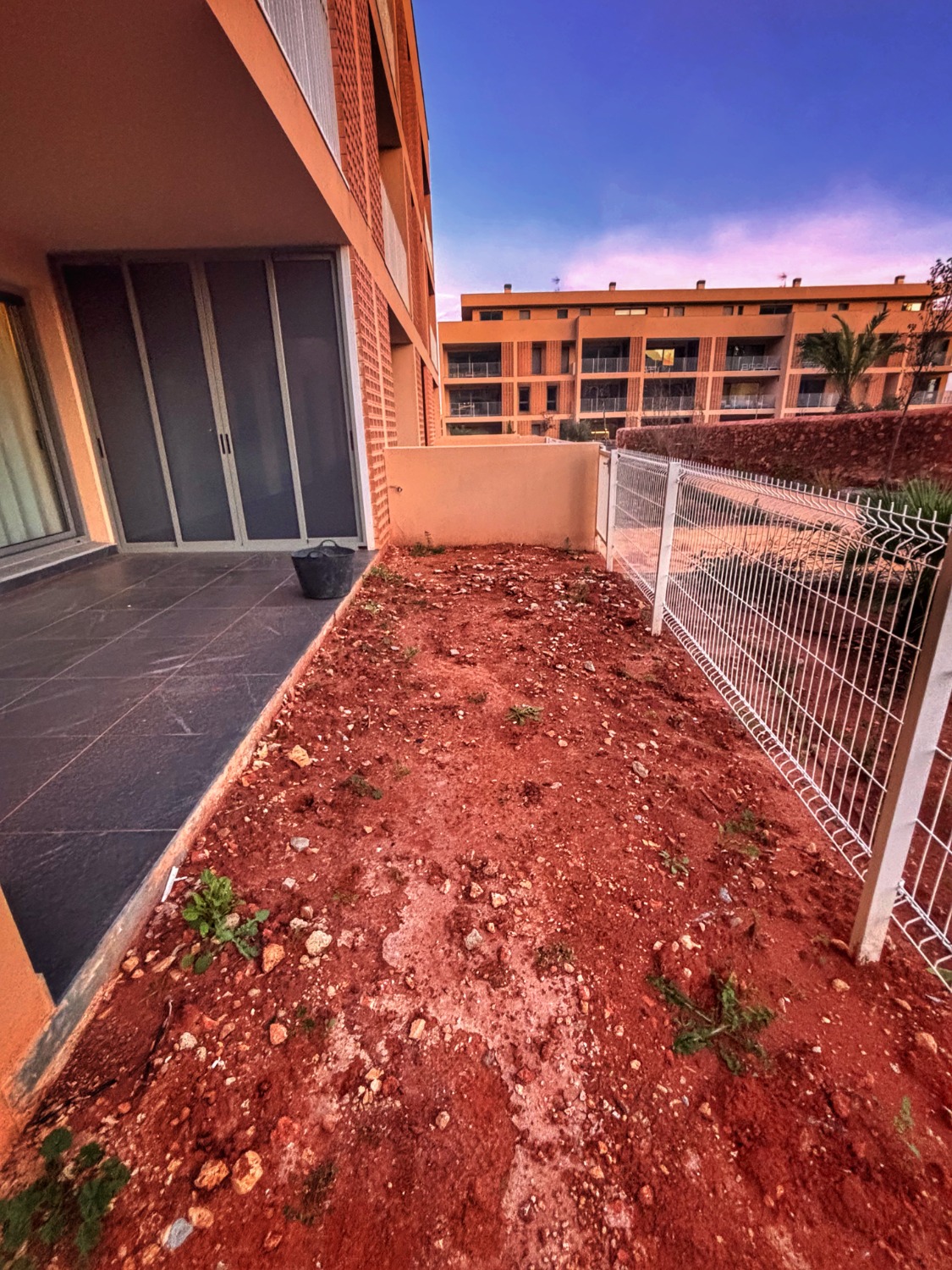
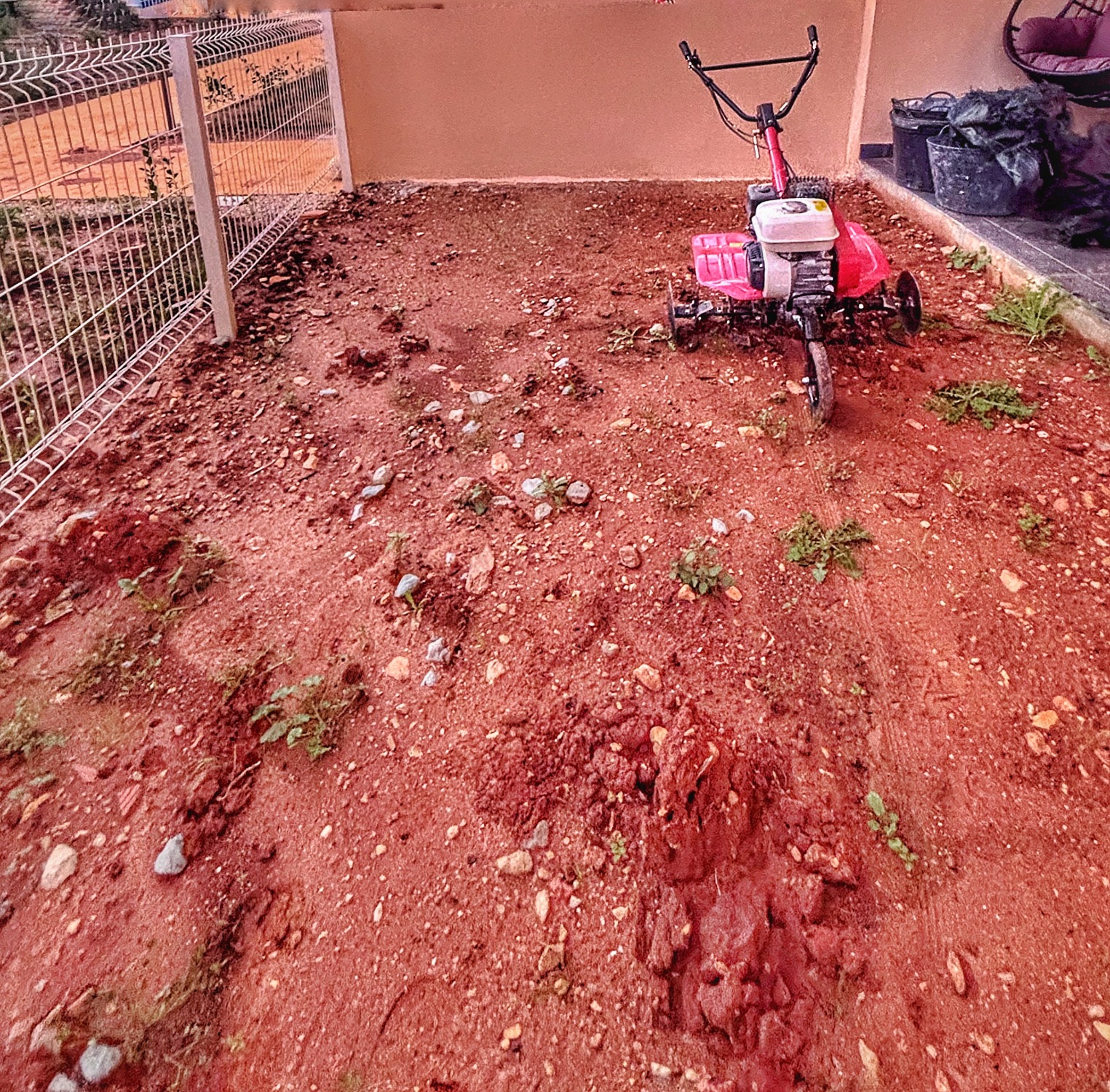
This project details the from-scratch design and execution of a small-scale garden, conceived under the principles of sustainability and xeriscaping. The primary objective is to maximize water savings and ensure perimeter privacy through advanced paving solutions and a carefully selected low-water botanical layout.
1. Zoning, Structures, and Spatial Boundaries
The design maximizes the available surface area through a clean layout that clearly separates the living spaces from the aggregate and planting zones:
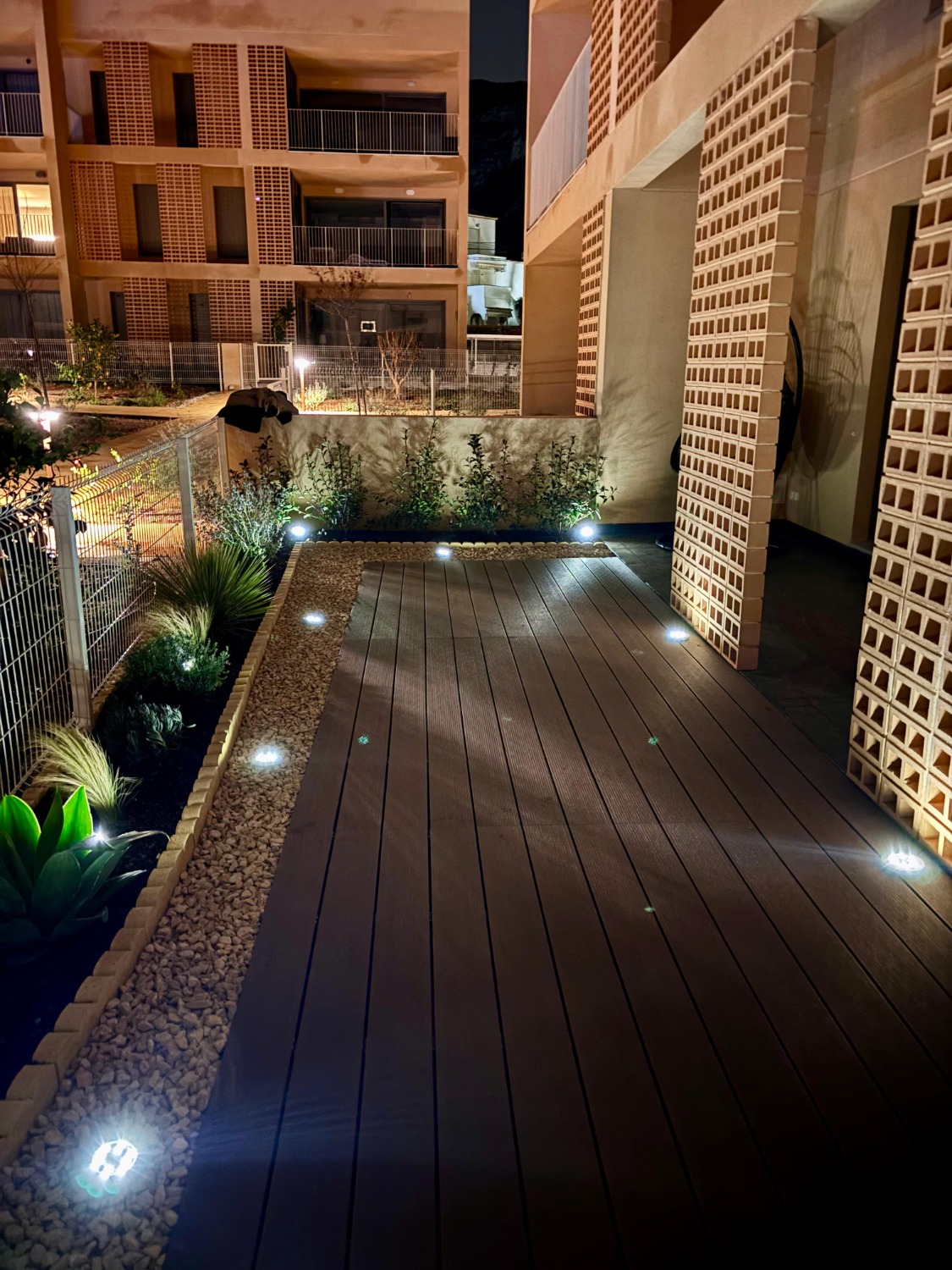
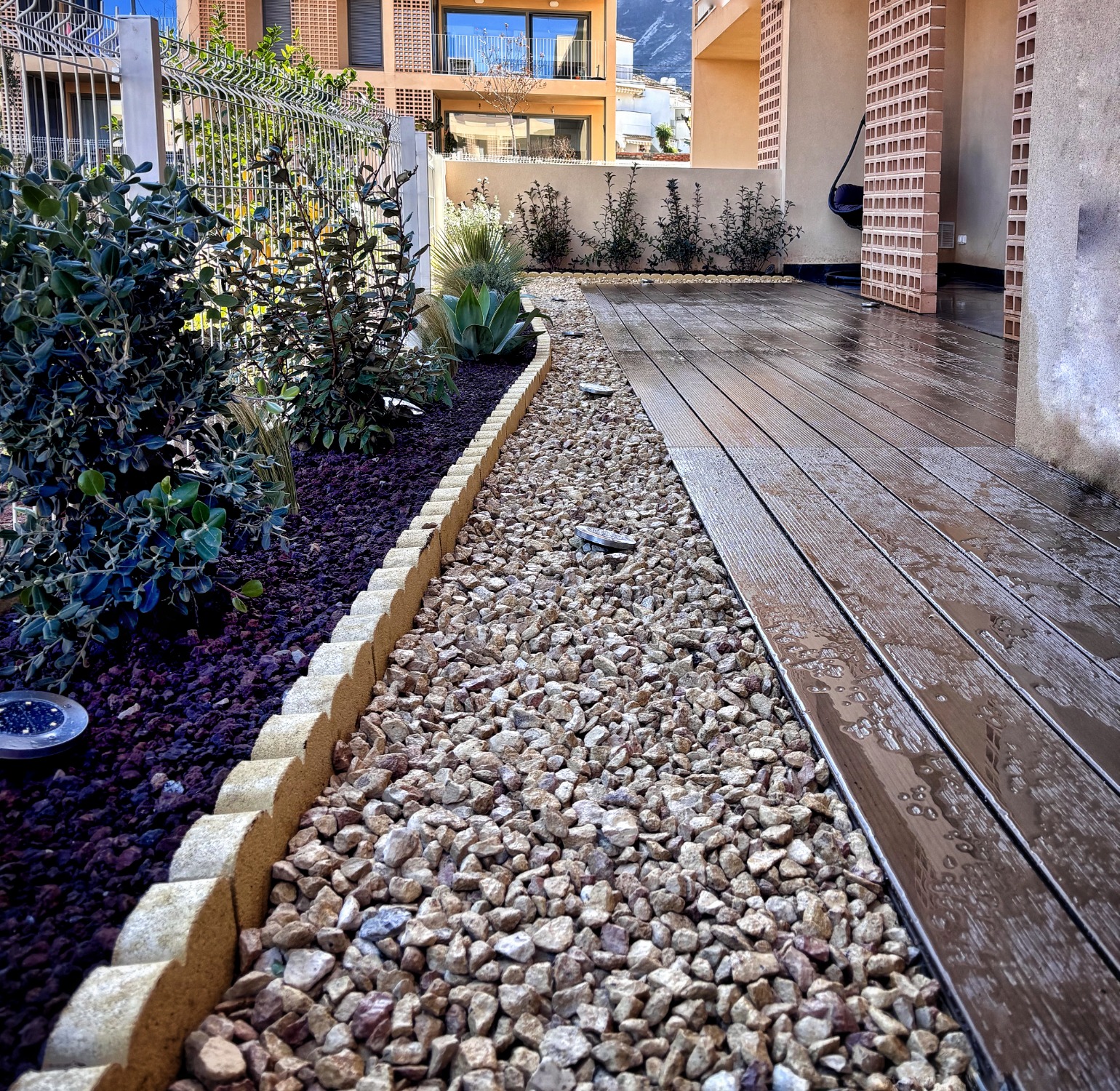
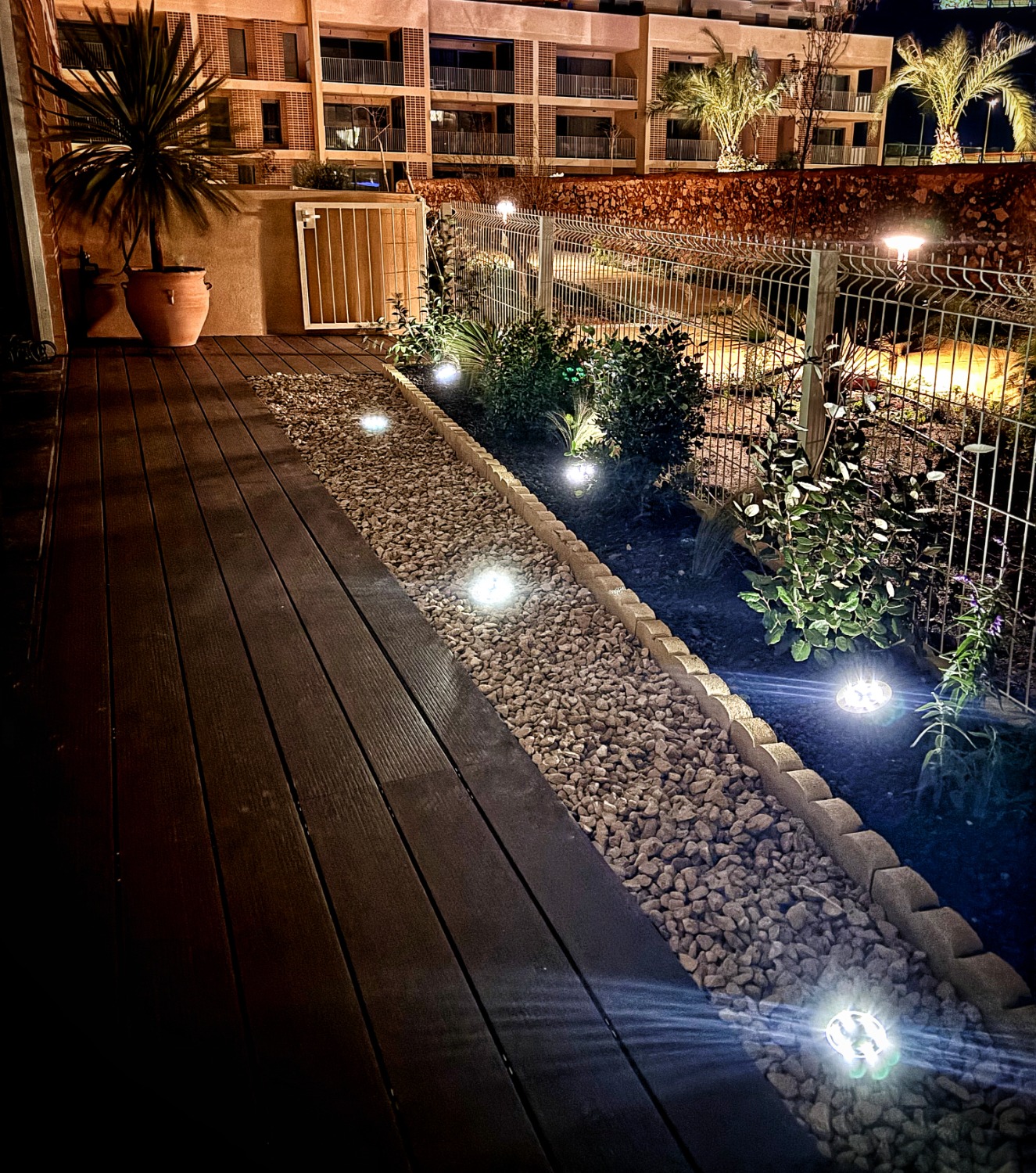
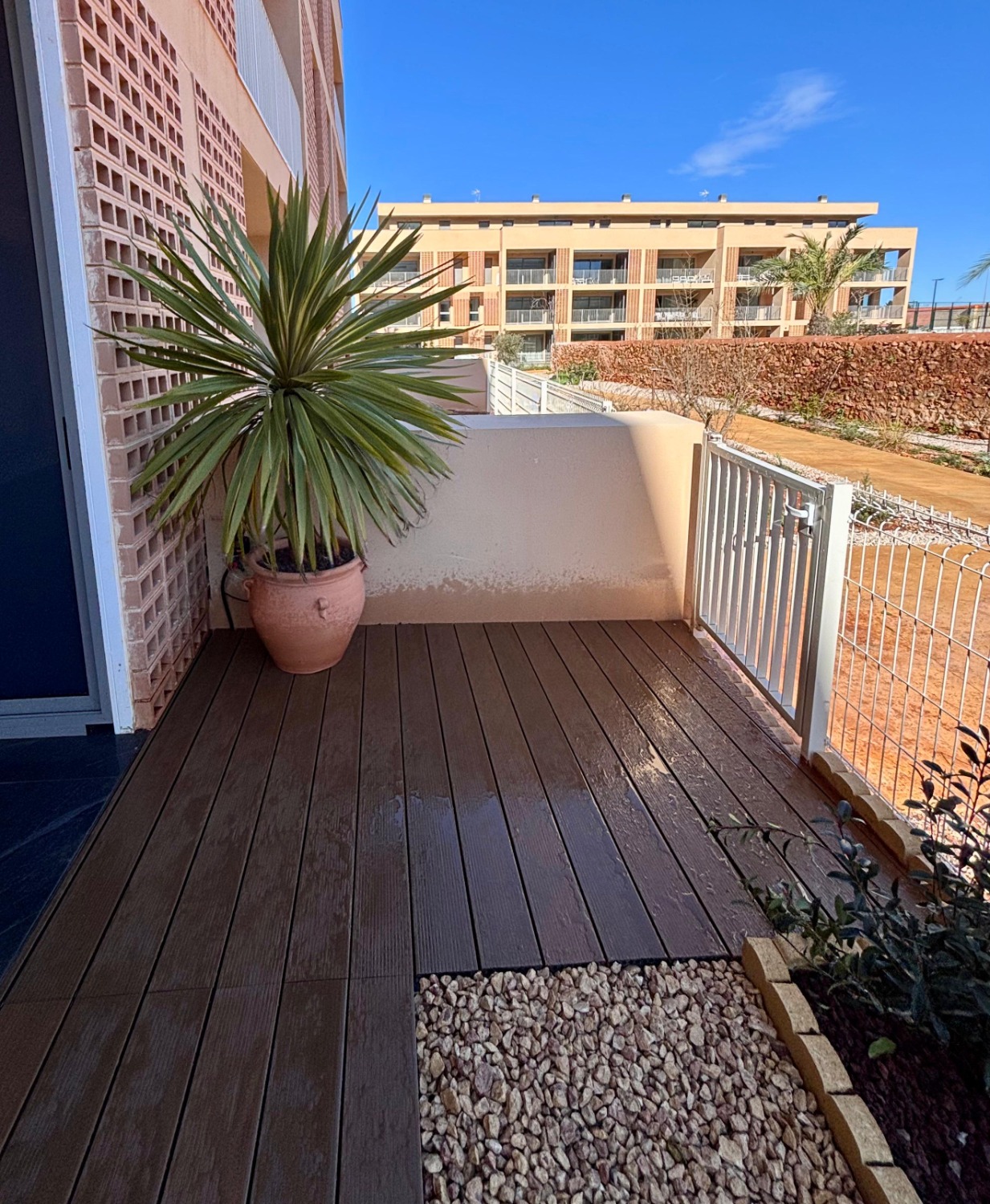
- Living Area Flooring: Installation of a high-quality composite wood deck platform, serving as the main gathering area. It provides warmth while completely eliminating the need for maintenance.
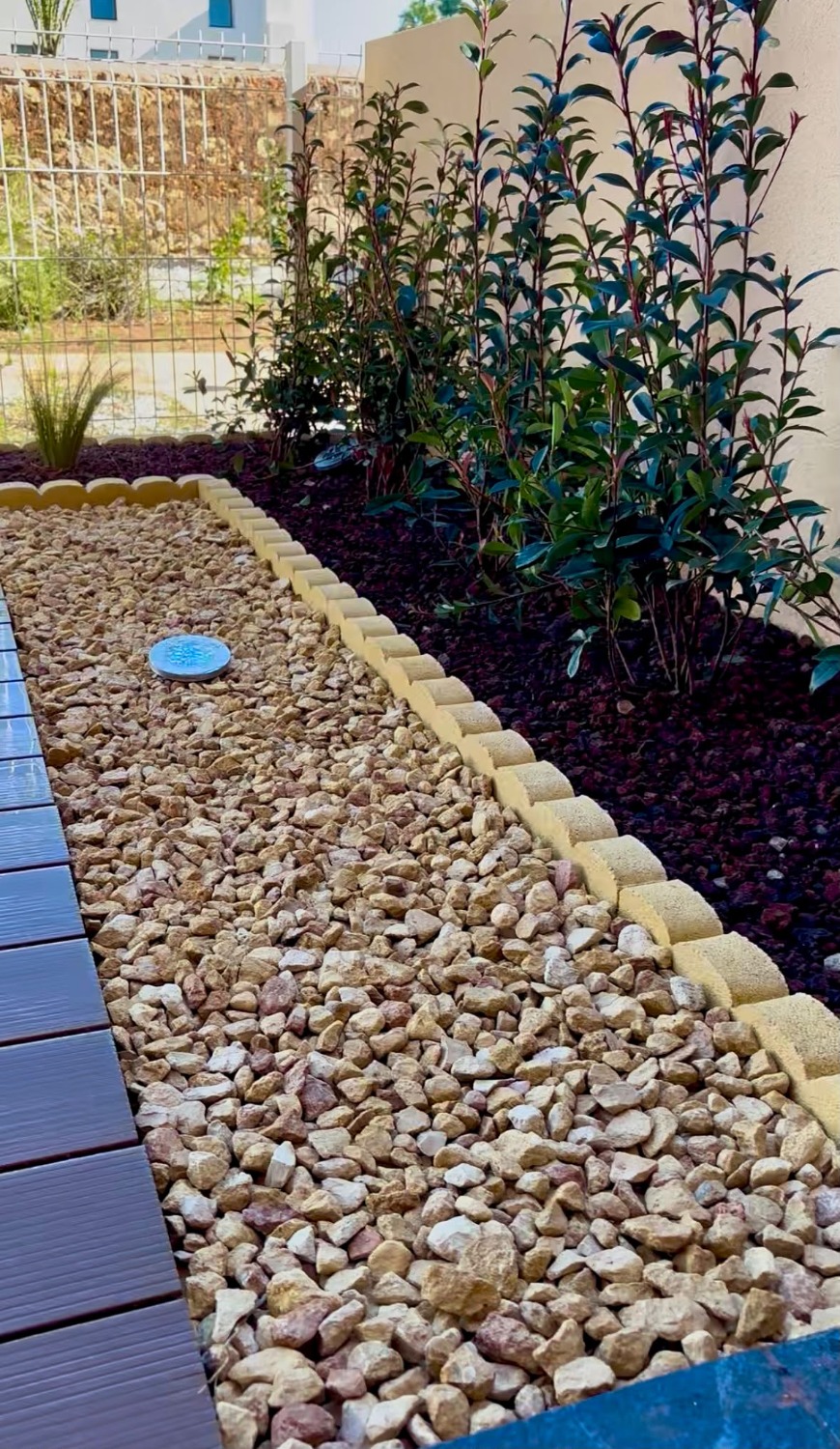
- Transitional Boundary: Placement of a yellow concrete edging with a wavy top finish. This element adds visual dynamism and serves as a clean divider between the decking area and the garden beds.
- Dry Bed: Configuration of an adjoining sector covered exclusively with yellow gravel, color-matching the edging and enhancing the natural brightness of the space.
2. Botanical Composition and Landscaping Criteria
The vegetation is integrated primarily into a continuous perimeter planter along the fence, complemented by freestanding specimens placed in two large pots. The botanical selection for this space features species such as Photinia fraseri 'Red Robin', Teucrium fruticans, Rosmarinus officinalis, Agave attenuata, Stipa capillata, a Cordyline, and an Olive tree, etc.
The layout of this green landscape has been strategically planned as a unified block to fulfill the following functional and aesthetic objectives:
- Perimeter Privacy: The taller, denser-foliage species are placed at the back of the planter against the fence, acting as a natural visual screen that isolates the garden from outside views.
- Structure and Texture: Combining the large, sculptural leaves of the succulents with the feathery lightness of the ornamental grasses provides a striking contrast of forms, giving body, dynamism, and volume to the space without overcrowding it.
- Color and Chromatics: The palette features vibrant colors that evolve throughout the year, contrasting the intense red shoots of the shrubs with the grayish, bluish, and olive-green tones of the remaining plants.
3. Energy Efficiency
- Self-Sufficient Lighting: The entire perimeter and focal points of the garden are equipped with automatic solar spotlights. These devices store energy during the day and turn on autonomously at dusk, ensuring zero electricity consumption and creating a scenic evening atmosphere.